

Mutualisms & positive species interactions
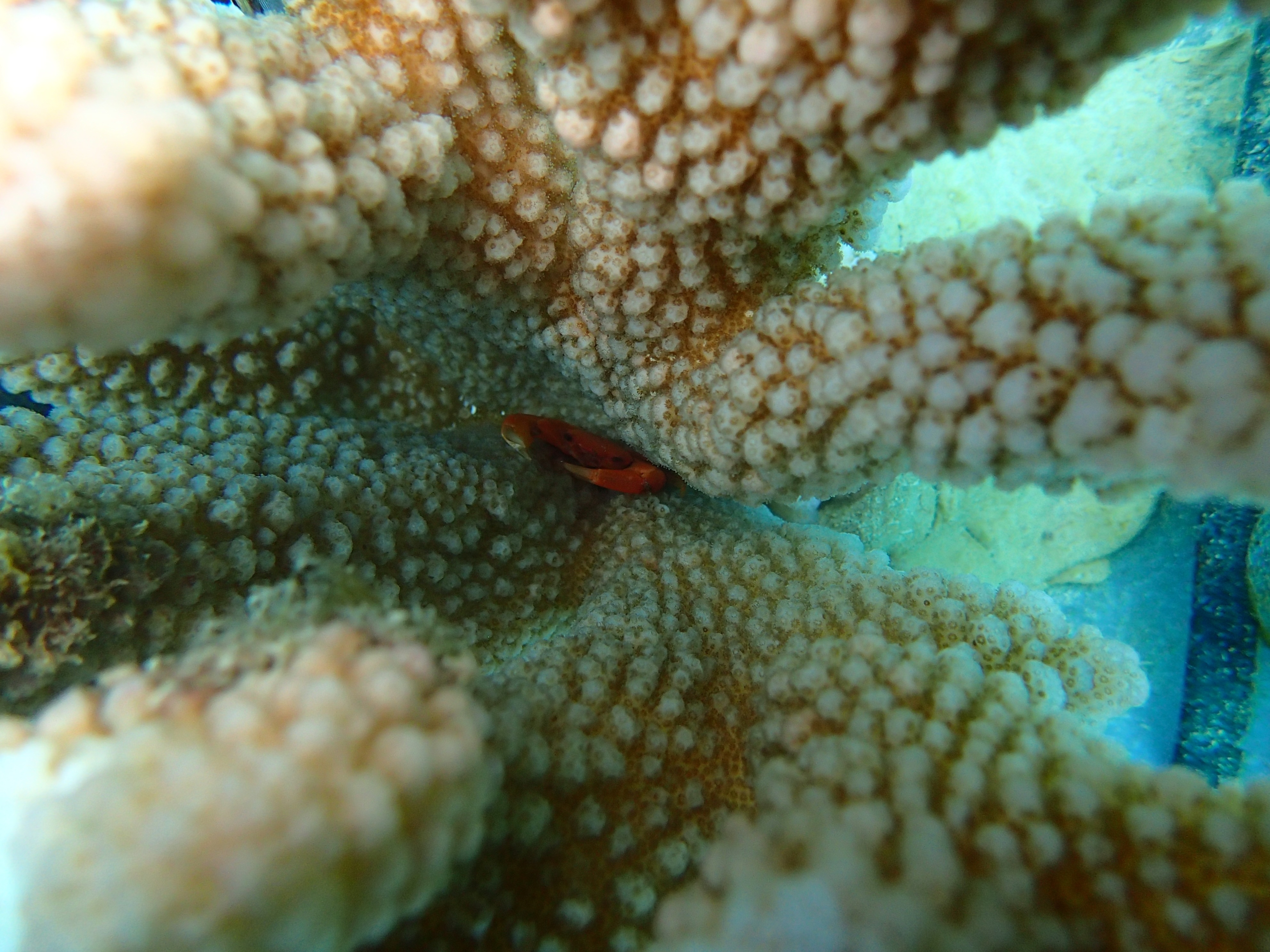
Positive species interactions (i.e., those where neither species is harmed and at least one benefits) between foundation species and the species that associate with them can be highly influential and influence ecosystem responses to stress. In my research I explore how these interactions influence whole communities, from fish to microbes. On the Great Barrier Reef, my experimental work showed that a key coral-crab mutualism could improve coral resistance to multiple stressors during a widespread marine heatwave. In French Polynesia, I'm exploring how nutrient pollution can alter networks of mutualisms and what that means for coral resistance to stress.
Predation & parasitism
By applying top-down pressure and influencing disease dynamics, predators and parasites can structure entire communities. My work explores both of these effects using surveys, experiments, and synthesis.
I'm particularly interested in: (1) how predators alter disease prevalence through wounding and the vectoring of pathogens, (2) how parasite-host relationships vary across stress gradients, and (3) how predation, particularly in tangent with other stressors (e.g., nutrient pollution), can change coral community composition and ecosystem properties (e.g., structural complexity).
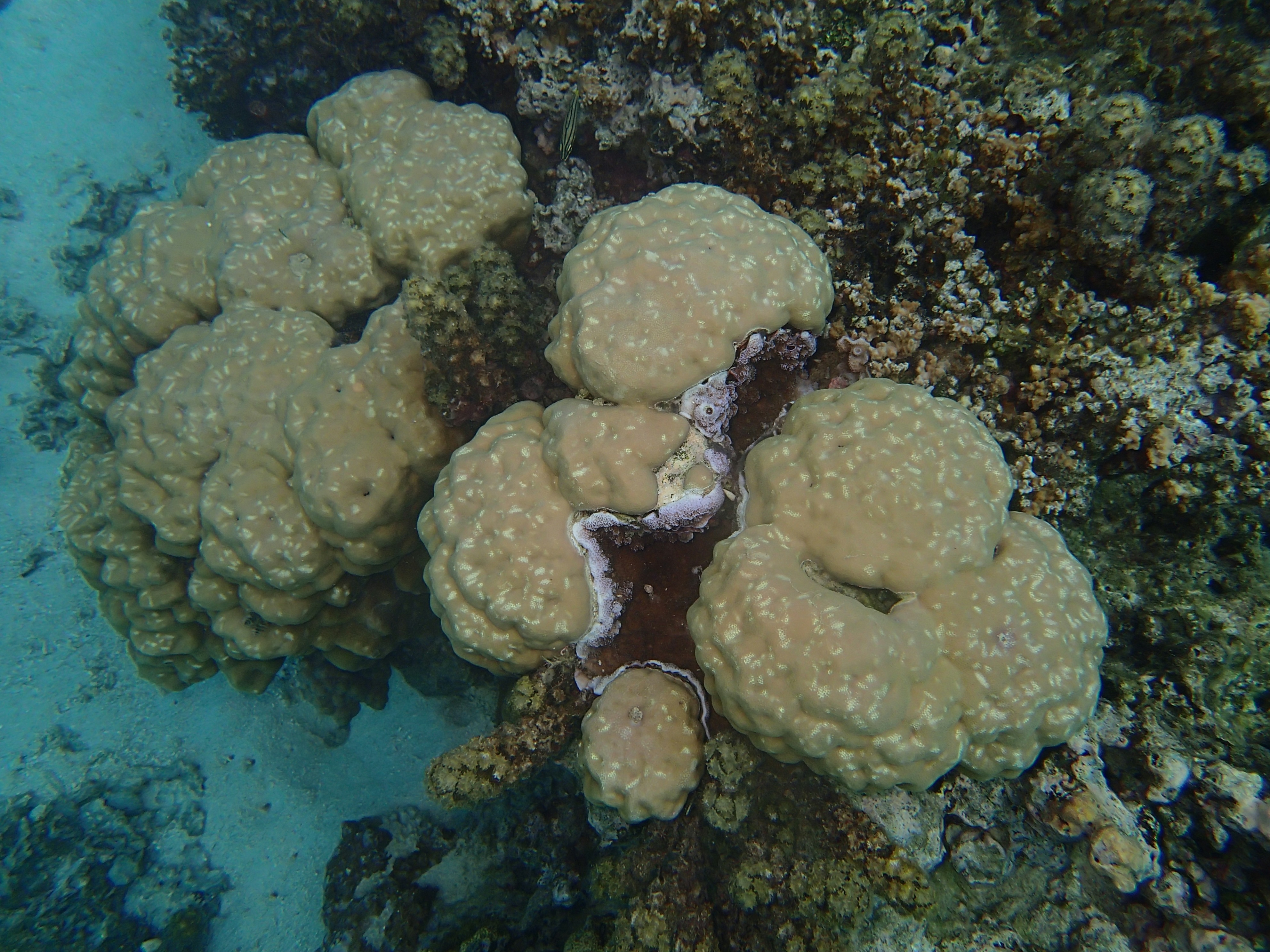

My research seeks to understand the importance of biodiversity for ecological communities in a changing world. On coral reefs, my work has looked at niche partitioning and how consumer identity influences diet. On a broader scale, I am using large, existing datasets to look at the role of biodiversity in ecosystem stability across ecosystems and large spatial scales.

Positive species interactions are common in stressful environments, such as restored coastal ecosystems. Using a mixture of literature reviews and field experimentation I'm investigating how positive interactions can be integrated into salt marsh, mangrove, oyster, and coral restoration designs to increase restoration effectiveness and protect shorelines. I also explore how conservation can maintain key species interactions that promote ecosystem health.


